
Nuclear Density Gauge Alternatives
NON-NUCLEAR COMPACTION TESTING
Nuclear Density Gauge Alternatives for Soil Compaction Testing
If you need to evaluate soil compaction in the field without a nuclear density gauge, several non-nuclear methods are available. The right alternative depends on what you need to measure.
A nuclear density gauge is designed to measure in-place density and water content using radioactive sources (ASTM -23). Other technologies measure Impact Value, stiffness, deflection, penetration resistance or electromagnetic density-related properties.
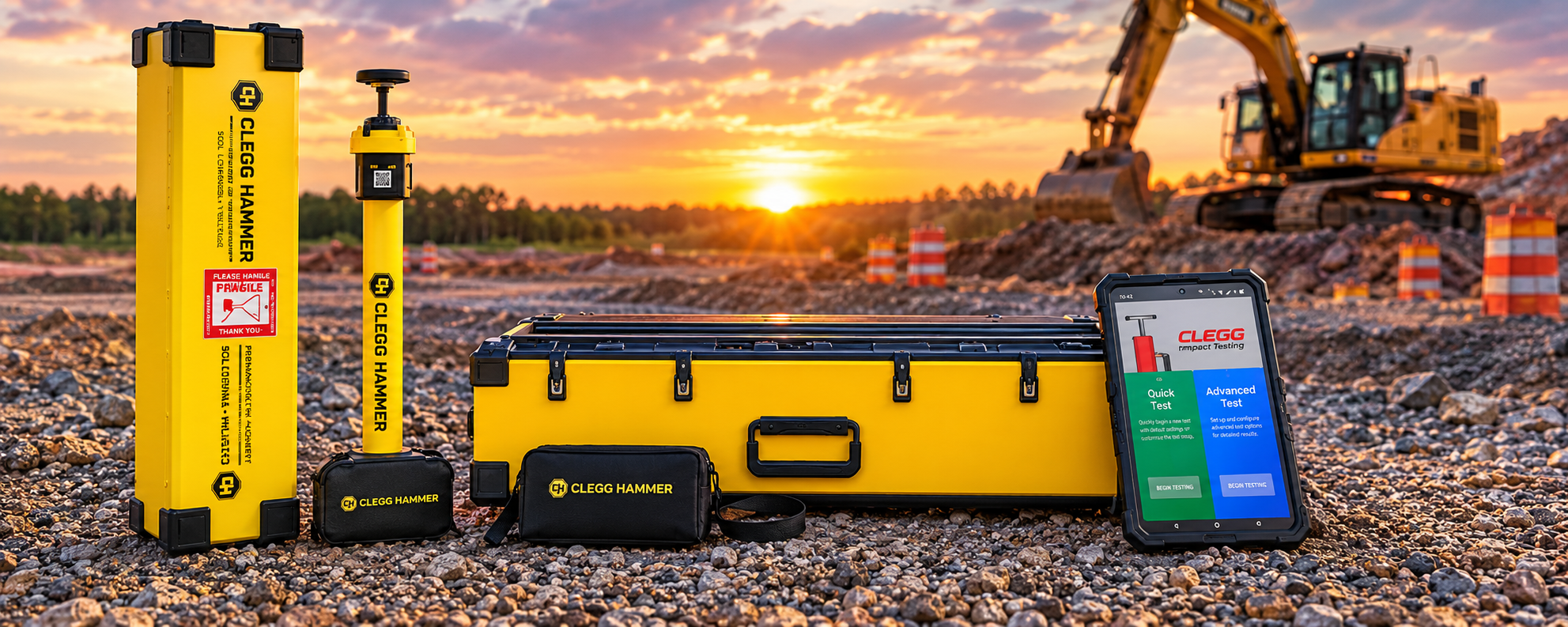
The Clegg Impact Soil Tester (Clegg Hammer) offers a rapid, non-nuclear way to evaluate the strength and stiffness response of compacted soil, aggregate and pavement materials. ASTM D5874-24 covers Impact Value and identifies pavement materials, soils, soil-aggregates and earthworks compaction control.
What Is a Nuclear Density Gauge?
A portable field instrument that measures the density and water content of soil and soil-aggregate. Under ASTM D6938-23, it uses gamma radiation for density and neutron interactions for water content. The source may be placed in a prepared hole or measurements may be made from the surface.
Gauges are widely used in construction quality control because they provide rapid, nondestructive measurements of:
Wet density
Dry density
Water Content
% Compaction
For projects that require direct density measurement, a nuclear density gauge may remain appropriate. However, a contractor, engineer, inspector or testing organization may want a non-nuclear alternative or an additional test that measures something other than density.
Why Look for an Alternative to a Nuclear Density Gauge?
Nuclear gauges provide useful measurements, but they involve radioactive material and the associated regulatory, safety, training, storage and operational requirements. In the United States, portable gauges are subject to regulation: the Nuclear Regulatory Commission maintains licensing guidance, and Agreement States may regulate radioactive materials in their jurisdictions. The NRC specifically identifies portable moisture/density gauges as devices under its licensing framework.
Radiation safety procedures
Operator training
Licensing or registration
Equipment storage
Transportation
Security
Calibration and maintenance
Regulatory compliance
Job-site controls
These requirements do not make nuclear gauges unsuitable. They simply mean organizations seeking a different approach may want to evaluate non-nuclear technologies.
What Are the Alternatives to a Nuclear Density Gauge?
No single device performs exactly the same function as a nuclear density gauge without nuclear technology. Non-nuclear equipment measures different properties, and these instruments should not be treated as interchangeable.
| Testing method | Primary measurement | Nuclear source | Typical use |
|---|---|---|---|
| Clegg Hammer | Impact Value | No | Strength; stiffness and compaction assessment |
| Electrical Density Gauge | Density/moisture-related properties | No | Non-nuclear density testing |
| Light Weight Deflectometer | Deflection/modulus | No | Subgrade and pavement evaluation |
| Dynamic Cone Penetrometer | Penetration resistance | No | Soil profiling and strength assessment |
| Sand Cone | Density | No | Traditional field density testing |
| Nuclear Density Gauge | Density and water content | Yes | Density-based quality control |
The important question: What property does your project actually need to measure?
Clegg Hammer: A Non-Nuclear Field Testing Option
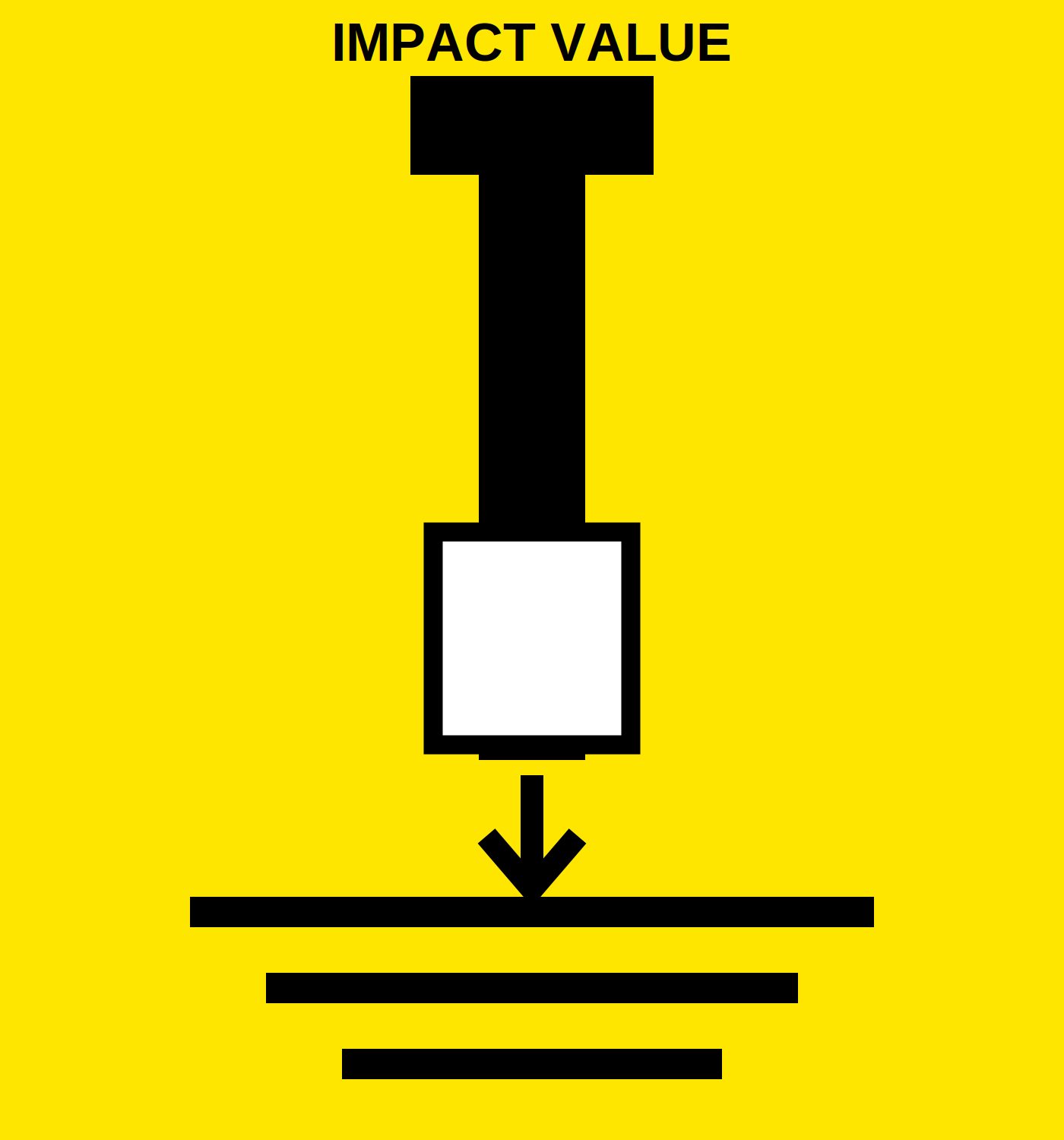
Instead of radioactive material, the Clegg Hammer uses a controlled impact and an accelerometer to measure the deceleration produced when the hammer strikes the material. The result is the Clegg Impact Value (CIV), also called Impact Value (IV).
ASTM D5874-24 describes Impact Value as a dynamic force-penetration property usable as a strength parameter, with direct applications to pavement design and construction and general applications to earthworks compaction control and evaluation of strength characteristics. The Clegg Hammer therefore indicates impact response, strength and stiffness rather than directly measuring density.
Clegg Hammer vs. Nuclear Density Gauge
The most important difference is what they measure.
| Attribute | Clegg Hammer | Nuclear Density Gauge |
|---|---|---|
| Primary measurement | Impact Value | Density and water content |
| Radioactive source | No | Yes |
| Direct density measurement | No | Yes |
| Strength/stiffness response | Yes | Not directly |
| Field testing | Yes | Yes |
| Rapid testing | Yes | Yes |
| Multiple-location testing | Yes | Yes |
| CBR correlation | Possible with appropriate correlation | Not the primary output |
| Compaction assessment | Yes, with appropriate procedures/correlations | Yes |
| Moisture measurement | No direct moisture measurement | Yes |
A Clegg Hammer should not automatically be presented as a one-for-one replacement when a specification requires direct density measurement. It can provide a non-nuclear measurement of strength/stiffness and be incorporated into compaction-control programs where Impact Value is appropriate.
Does a Clegg Hammer Measure Soil Density?
No. It measures Impact Value. However, Impact Value can be used to evaluate compaction-related performance and, under appropriate conditions, can be correlated with density. ASTM D5874-24 includes field and laboratory procedures, including field Impact Value with water content and dry density, and laboratory testing in a mold. For a particular soil, laboratory correlations can relate Impact Value to compaction.
Clegg Hammer → Impact Value
Nuclear Density Gauge → Density + Water Content
The Clegg Hammer does not simply calculate density using a different technology.